Samuel Mewhinney
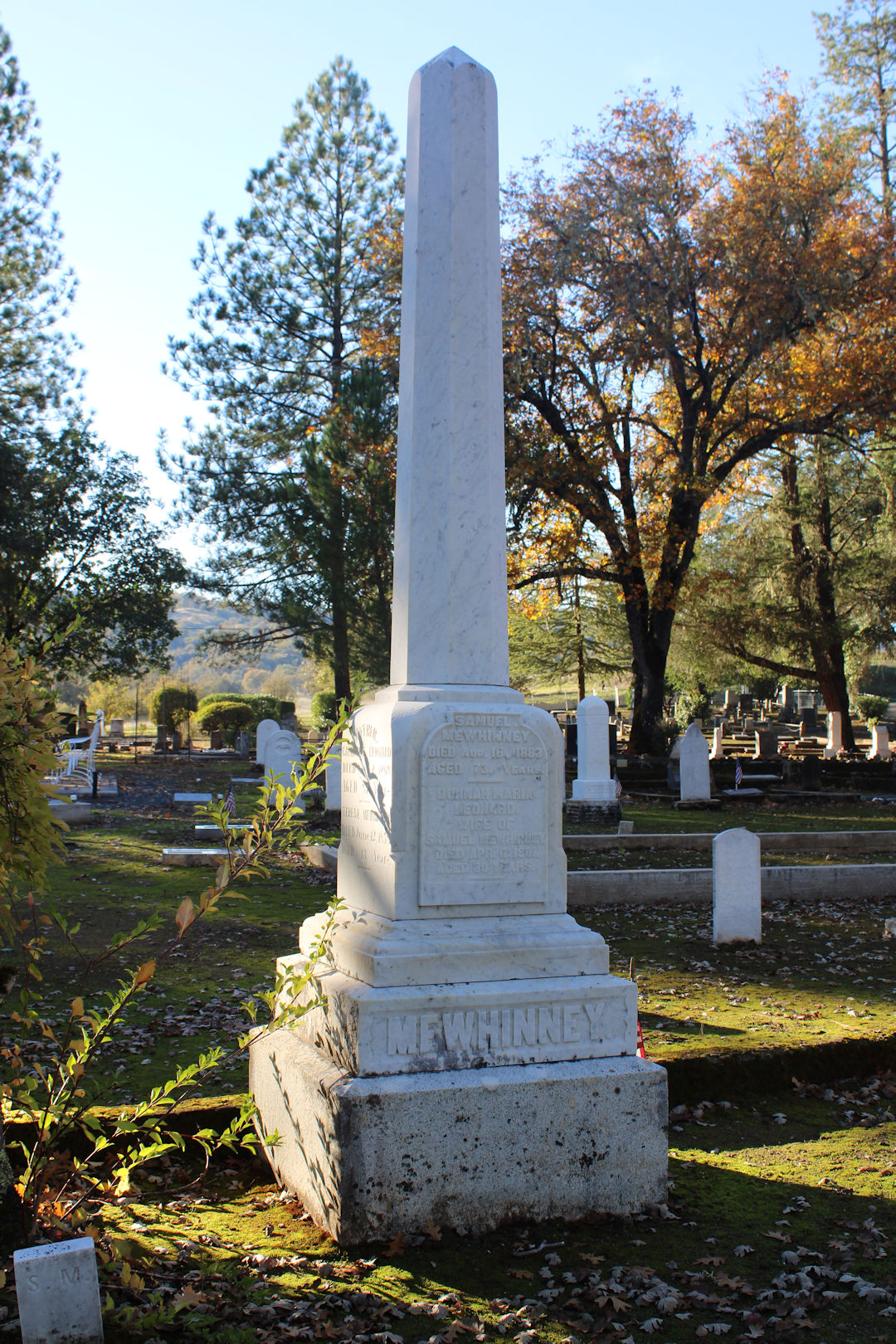
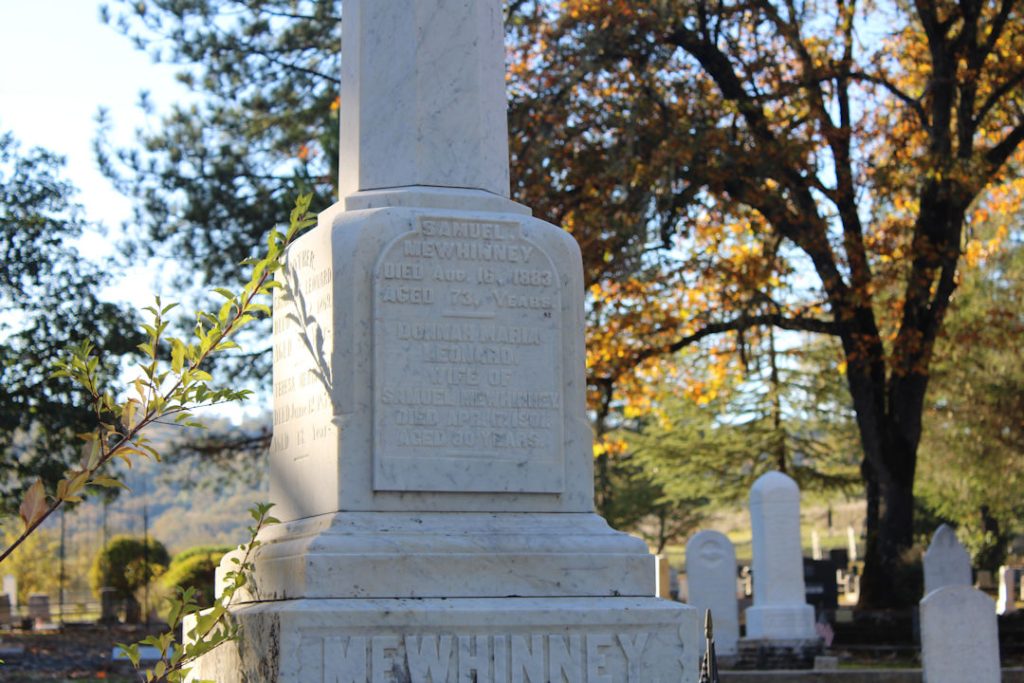
The Mewhinney Journey: A Pioneer Legacy in Potter Valley
Samuel Mewhinney was born on August 18, 1810, in Hamilton County, Ohio — a place where the frontier still whispered of opportunity and hardship in equal measure. As a young man, Samuel married Sarah Robertson in 1835, and together they started a family that would grow to include four children: John, James, Hugh, and Ann. But their time together was short. Sarah passed away on June 10, 1842, at the age of just 26, leaving Samuel a widower with young children.
The following year, Samuel found companionship again, marrying Daunah Marie Leonard on November 3, 1843, in Vigo County, Indiana. Daunah was strong, nurturing, and carried her own legacy — she came from the Leonard family, whose name would one day be given to Leonard Lake in California. Together, Samuel and Daunah would have two children: Teresa and Fremont.
Long before most dared to make the journey, Samuel ventured to California in 1840, a land still shrouded in mystery and promise. He returned again in 1849 during the height of the Gold Rush, leaving his family behind as he tried his hand at mining and carpentering. For three years, he carved a living from California’s rugged hills before returning east.
In 1857, driven by hope and perhaps a bit of restlessness, Samuel and Daunah gathered their family and set out once more — this time, together. Along with the Leonards, the Carpenters, and the McGowans, they joined a wagon train bound for the West. The journey across the plains took nearly nine months, with oxen pulling them mile by mile over mountains, rivers, and dust-choked roads. In January of 1858, they arrived in Mendocino County, California, settling in Potter Valley.
But the land did not grant peace without loss. In June of 1858, their daughter Teresa, just 12 years old, passed away. She became the first person buried in the Potter Valley Cemetery, her young life marking the beginning of a new chapter in the valley’s story. Earlier, in 1855, their son Fremont had died in Kansas at the age of 8 — a detail lost to time, but deeply felt by the family that survived him.
Despite tragedy, the Mewhinneys endured and built a new life. Samuel prospered as a farmer, raising cattle and growing hops and barley in the fertile valley soil. Daunah became the community’s beloved nurse, delivering babies with care and unwavering dedication — never once losing a patient. Her gentle hands brought life into the world, even as the land had taken so much from her own.
In 1868, Samuel and his sons built a stately two-story home on Burris Lane, a structure that still stands as a testament to their craftsmanship and permanence in the valley.
On August 16, 1883, Samuel passed away in Potter Valley, just two days before his 73rd birthday. Daunah followed him in 1901, leaving behind a legacy not just in her family, but in the lives she touched as a healer and pioneer woman.
Their journey — from Ohio to Indiana, across the plains to California — is not only a tale of personal resilience but also a reflection of the American pioneer spirit. Through loss and hope, labor and love, the Mewhinneys helped shape the story of Potter Valley and left a legacy that endures in both memory and place.
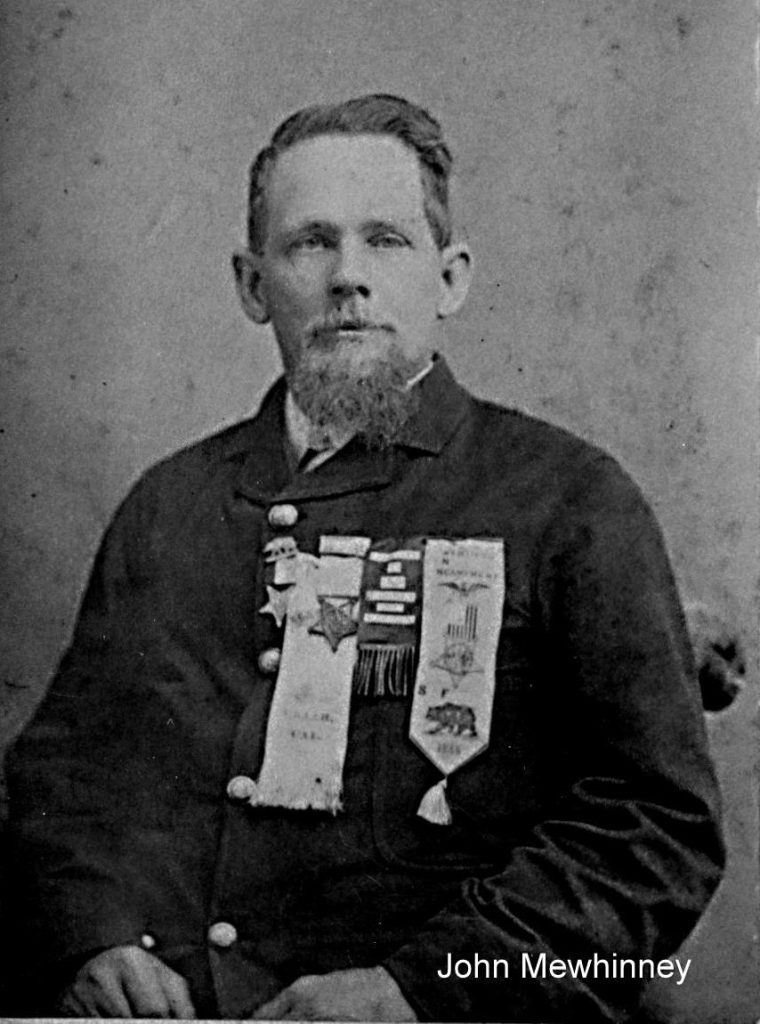
John Mewhinney was born on December 5, 1836, in Terre Haute, Indiana, to Samuel and Sarah Mewhinney. His mother, Sarah, passed away in 1842.
In 1857, John journeyed to California with his father Samuel, stepmother Daunah, and his siblings. They traveled alongside the Leonard, Carpenter, and McGowan families, arriving in Potter Valley in January 1858. Their first summer was spent living in a tent. John, his brother Hugh, and their father each homesteaded 160 acres at the lower end of the valley, along the area now known as Mewhinney Creek.
On September 12, 1861, at the age of 24, John enlisted in the Union Army during the Civil War. He served as a Sergeant in Company D of the 2nd California Cavalry and was mustered out on September 24, 1864, in San Francisco.
John played a key role in founding the Potter Valley Grange, established on November 6, 1873, and served as its first master. The organization began with 75 members, including Samuel and Daunah Mewhinney.
A successful farmer, John cultivated wheat and hops, which he sold to buyers as far away as New Zealand. He also grew apples, pears, and grapes, and even conducted systematic research into agricultural diseases and their remedies.
John was active in civic life. He served as a polling inspector during the 1880 election and, in 1882, he and his longtime friend A.O. Carpenter were elected delegates to the state Republican Party convention.
In 1889, John was part of a committee that selected the location for a bridge across the Russian River near Cold Creek. That same year, he was elected a trustee of the newly incorporated Town of Potter Valley and also served on the Mendocino County Grand Jury. In 1891, he was authorized to oversee the burial of honorably discharged veterans who died indigent in Mendocino County.
At the age of 66, John married Mrs. Alice E. Elliot, who was 42, in San Francisco. At the time of their marriage, Alice had a foster son, Henry Clay Spurr (1893–1981).
John Mewhinney passed away on September 6, 1919, at the age of 82. Alice died on March 17, 1941, at the age of 80.